Getting Started with In-Water Surf Photography: Tips, Safety & Mindset
There are plenty of barriers to cross when it comes to getting started with in-water surf photography. Equipment, ocean access, knowledge of waves and currents, ocean swimming, navigating the line-up… these are just some of the physical challenges you’ll face. But in many ways, the psychological barriers can feel just as significant, if not more so.
Nerves about the swim, introducing yourself to surfers, trusting your equipment—and trusting yourself—can all weigh heavily at the start. Doubting your abilities, dealing with imposter syndrome and understanding your limits can feel overwhelming. It’s a long list, one I’d like explore more deeply in another article. For now, I want to go beyond surface-level surf photography tips and offer something more honest that hopefully that helps you move through those barriers, not just recognise them.
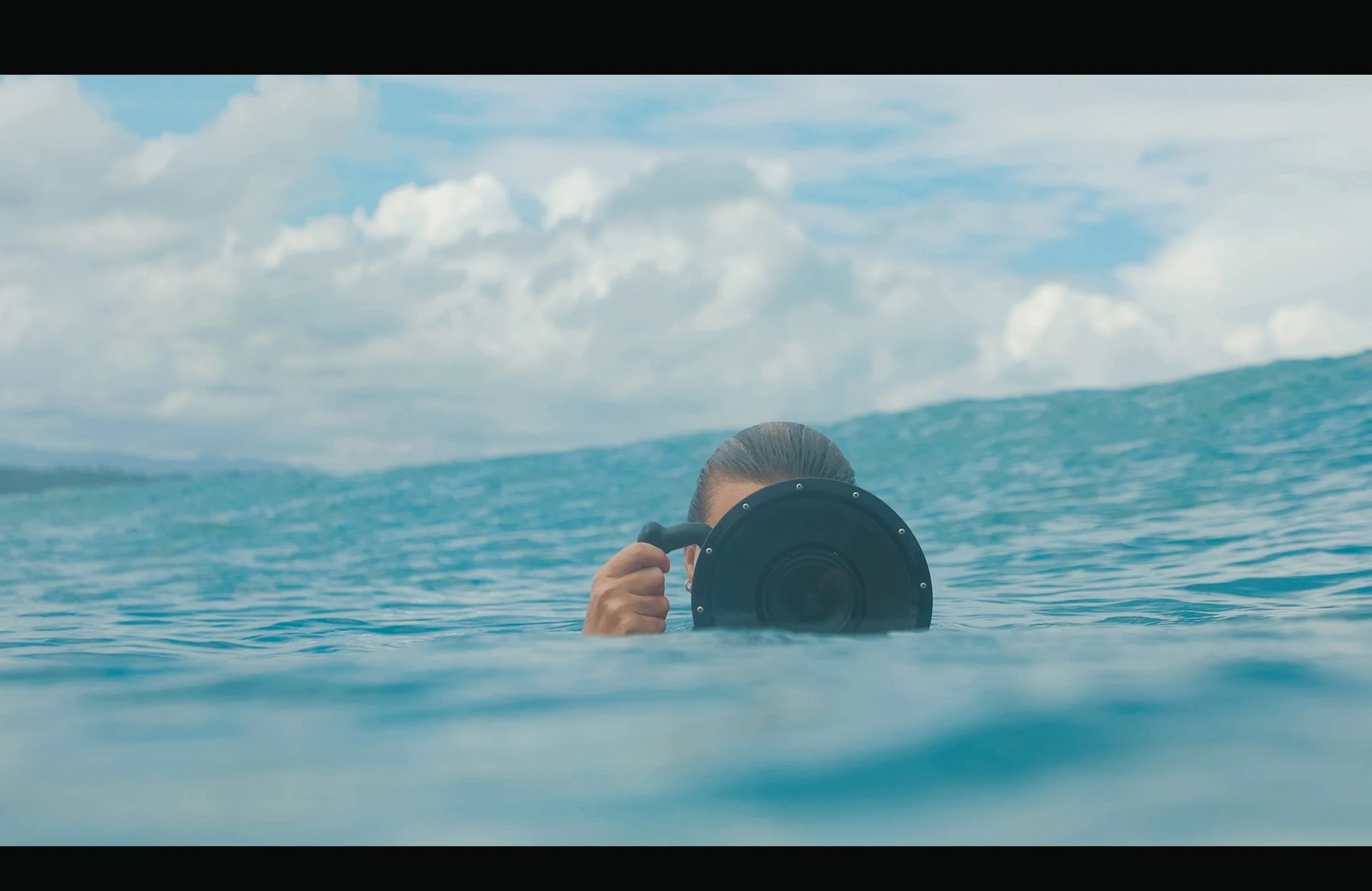
In the beautiful tropical water of Indonesia (shot by @misterrclips)
Understanding Your Starting Point
The challenges you face will depend a lot on your background. If you already surf, you’ll naturally have an advantage when it comes to reading waves, understanding positioning and anticipating movement in the line-up. That awareness makes a huge difference when you’re trying to capture moments from the water.
If you don’t surf, that doesn’t mean you can’t become a strong in-water photographer it just means you need to spend some time observing. Sitting on the beach and watching the line-up is one of the most valuable things you can do. Pay attention to how surfers move, where they sit and how they set up before a manoeuvre. Over time you’ll begin to recognise patterns, and that awareness will help you position yourself safely while still getting close to the action.
Reading the Ocean
Understanding the people in the water is important, but understanding the ocean itself is essential for both ocean photography and your safety. Before entering the water take time to properly assess the conditions. Look at how waves are breaking, what the set waves look like, how currents are moving and where safe entry and exit points are.
If you already know the spot from surfing, that’s a strong advantage but swimming with a camera is very different from paddling a board. You’ll move slower, fatigue faster and often position yourself on the inside or in the channel rather than sitting in the line-up. Because of this, it’s important to think carefully about how the water moves in those spaces and how manageable the impact zone is.
If you’re unfamiliar with a surf break speaking to locals is one of the best things you can do. In my experience, teaming up with a competent surfer who knows the spot well can make a huge difference. You can offer photos in exchange for entering and exiting the water together and an occasional check in by raising an arm. Even though you’re responsible for yourself knowing someone is with you can be huge in relieving anxiety and all it takes is a friendly chat.
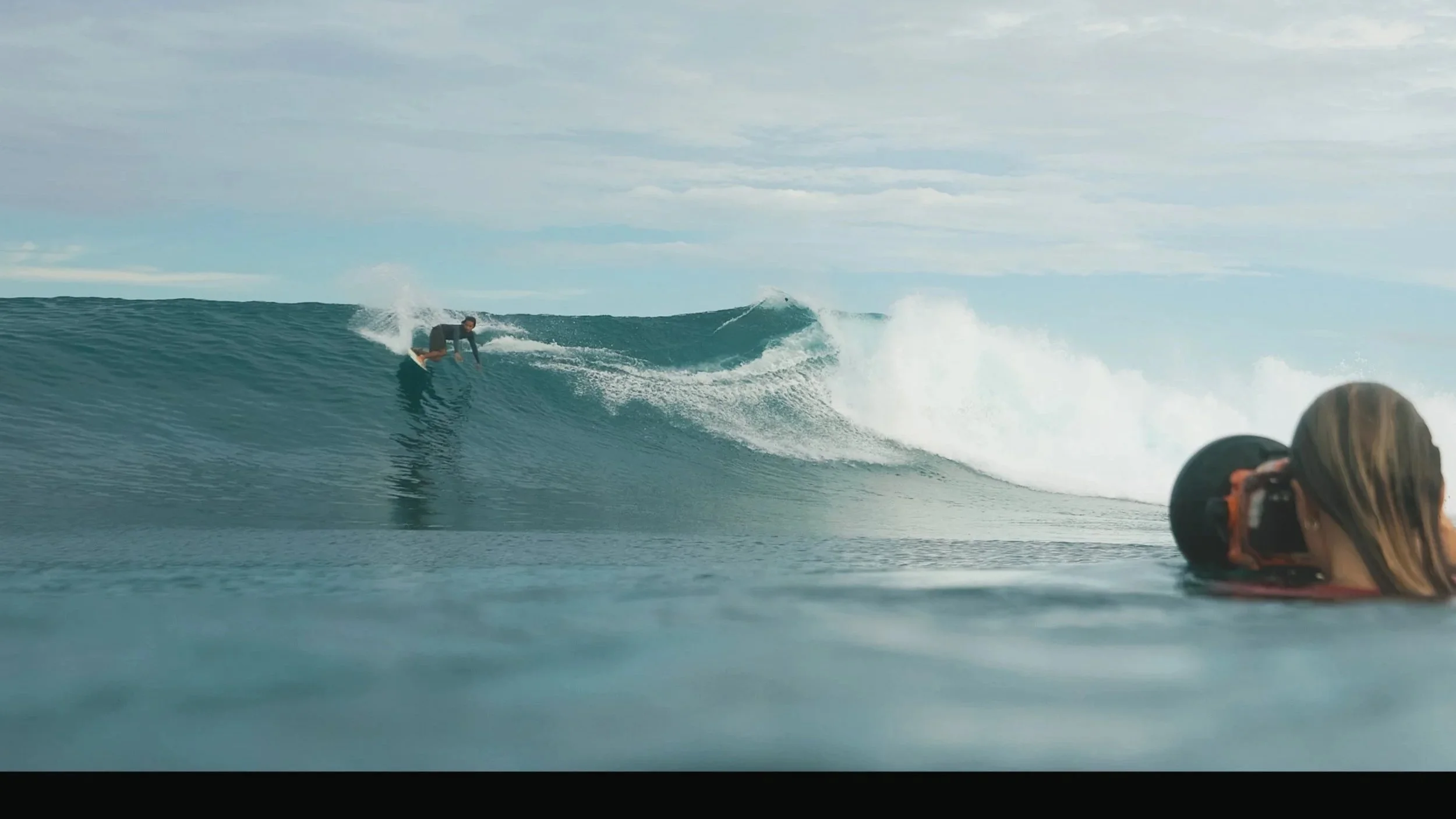
Shooting in Indonesia (shot by @misterrclips)
Getting Comfortable with Your Camera
The ocean is constantly changing and things happen quickly, so being comfortable with your camera is essential for surf photography in the water. You need to be able to adjust your settings instinctively, without taking your eyes off what’s happening around you. Spending too long navigating menus can mean missing key moments or getting caught out of position.
Practicing on land is a great place to start but when you’re using a water housing it’s equally important to practice with that setup too. Every housing is different, and you probably won’t have access to every control so try to get familiar with the controls you’ll most likely need during your swim.
I learned this early on during one of my first swims with a new setup, when I didn’t realise my exposure dial had shifted before sealing the housing. I’d recently bought a Sony a7RIII with a Liquid Eye housing. My housing had access to almost every control but that dial wasn’t one of them unfortunately. So, without access to that control in the water I ended up with a full session of overexposed images. It was frustrating at the time but it became part of my pre-swim checks.
Start Simple with Equipment
One of the biggest misconceptions about getting into surf photography is that you need high-end gear from the beginning. In reality, starting simple is often the best approach. My first setup was a compact camera (Sony RX100V) with a basic Sony water housing. It was lightweight, easy to manage and allowed me to focus on learning and enjoying the process without more complex equipment.
If you’re curious about where this journey can lead, you can explore more of my work in my portfolio, where I share a mix of in-water, land-based, and drone photography from different locations around the world. Below you can see a few of my first ever in-water surf photos shot with the compact camera in Sri Lanka.
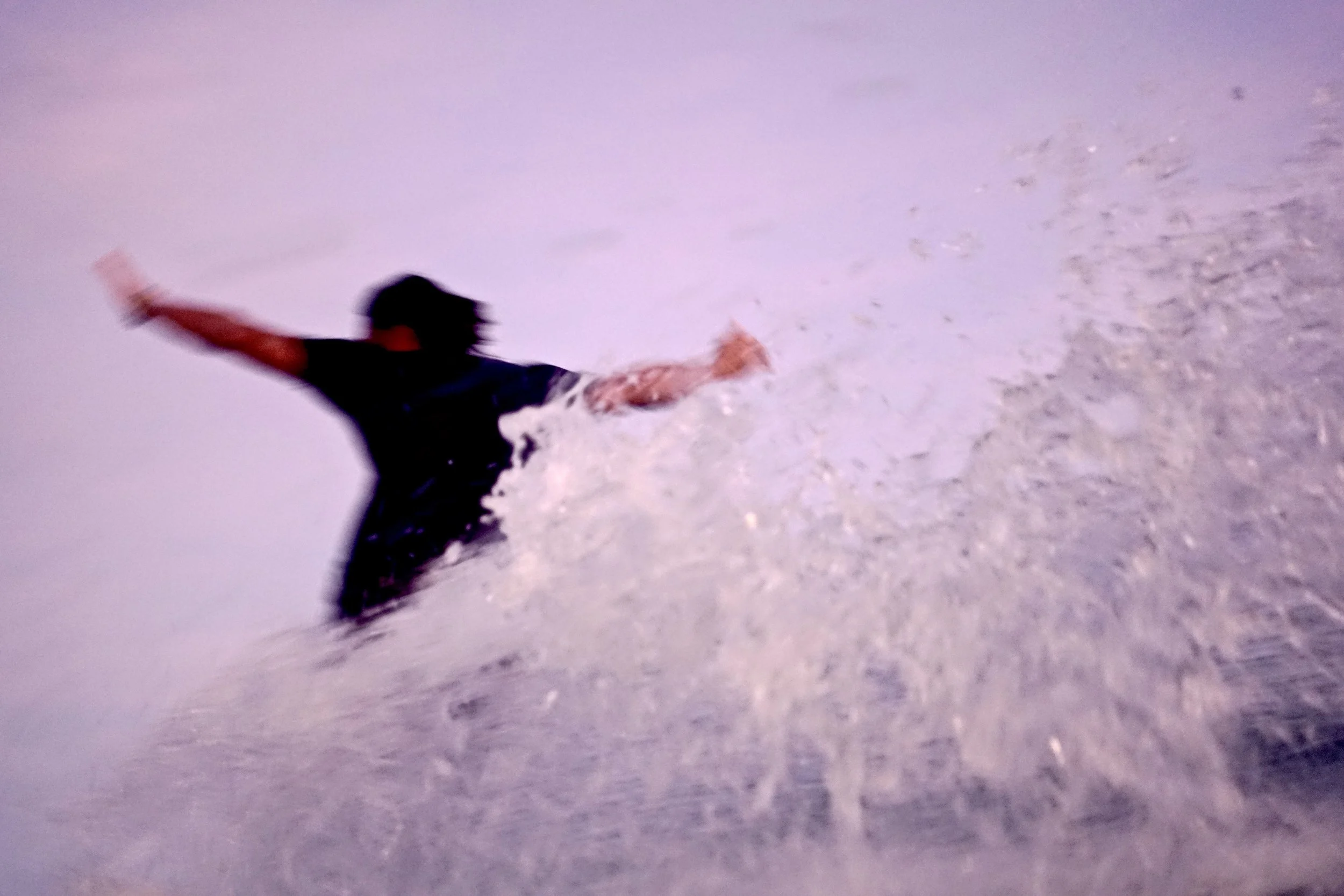
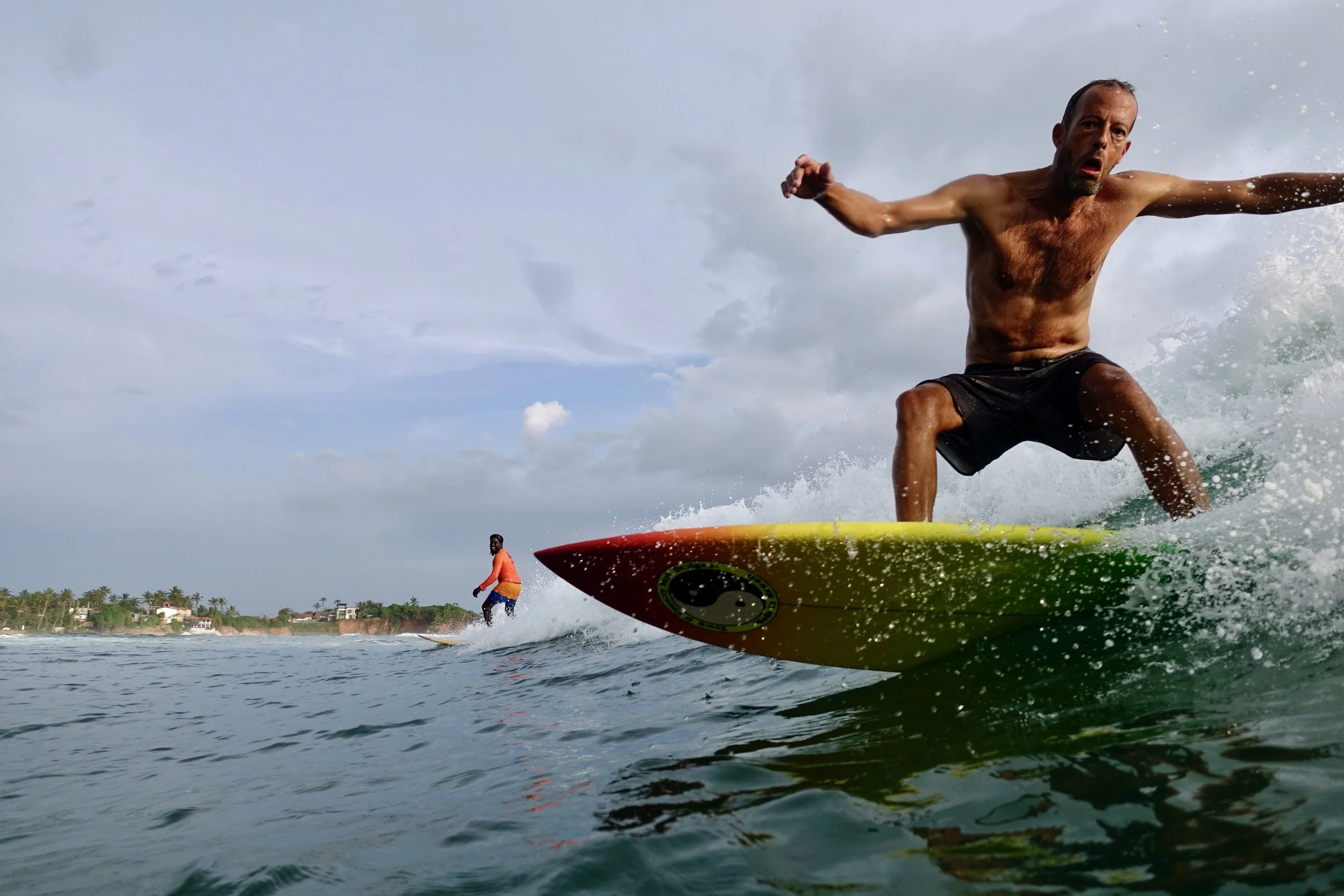
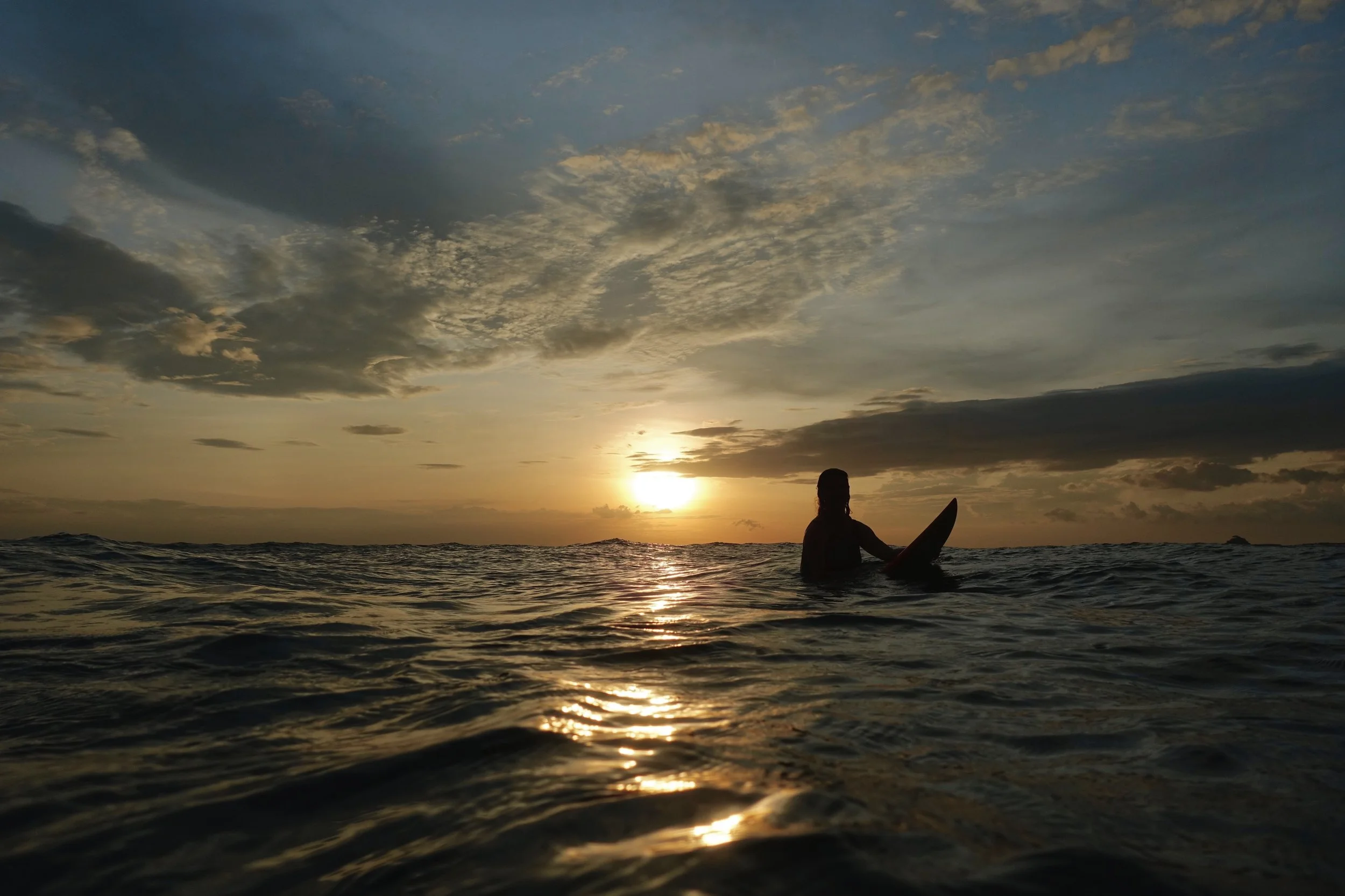
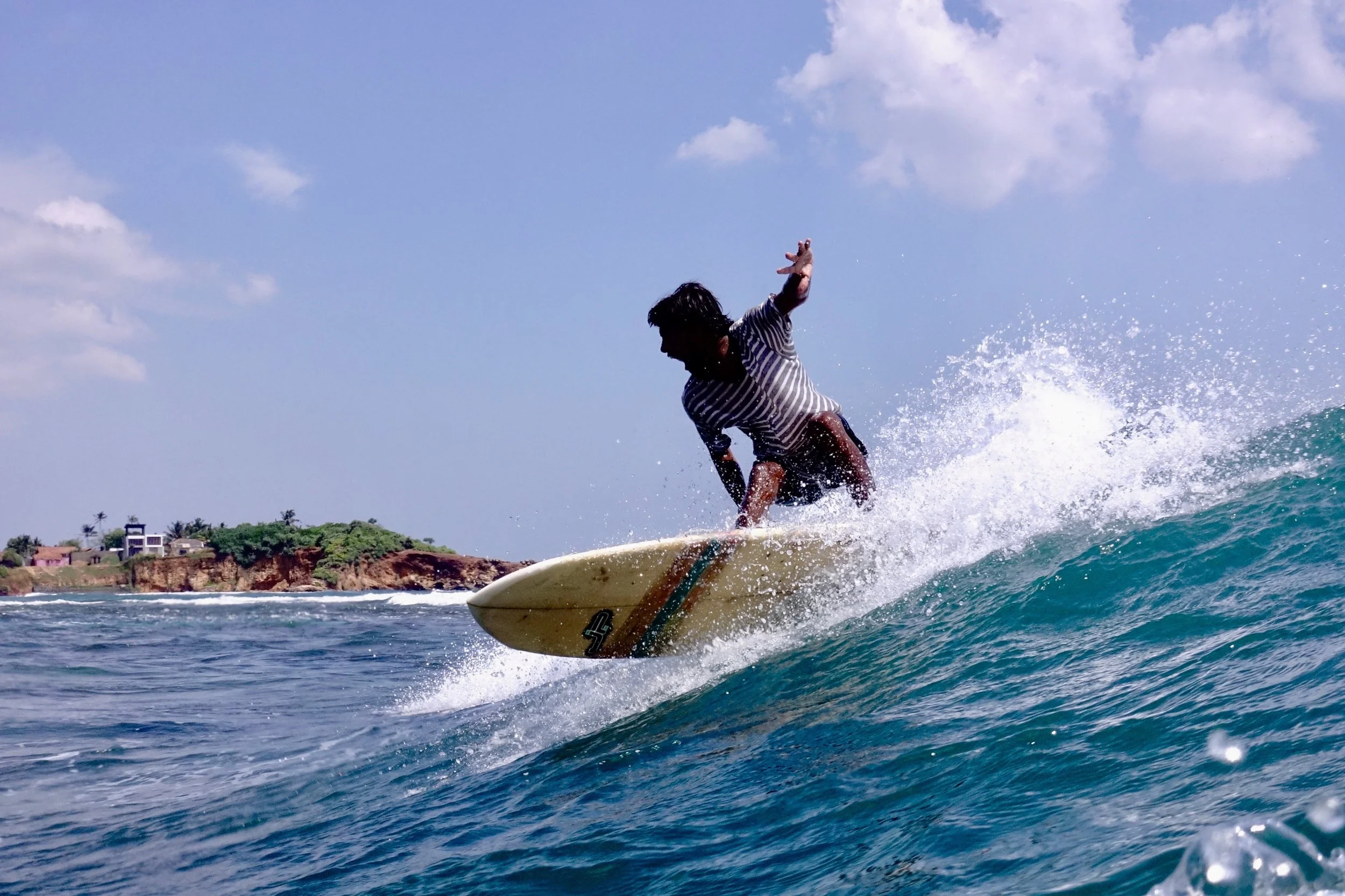
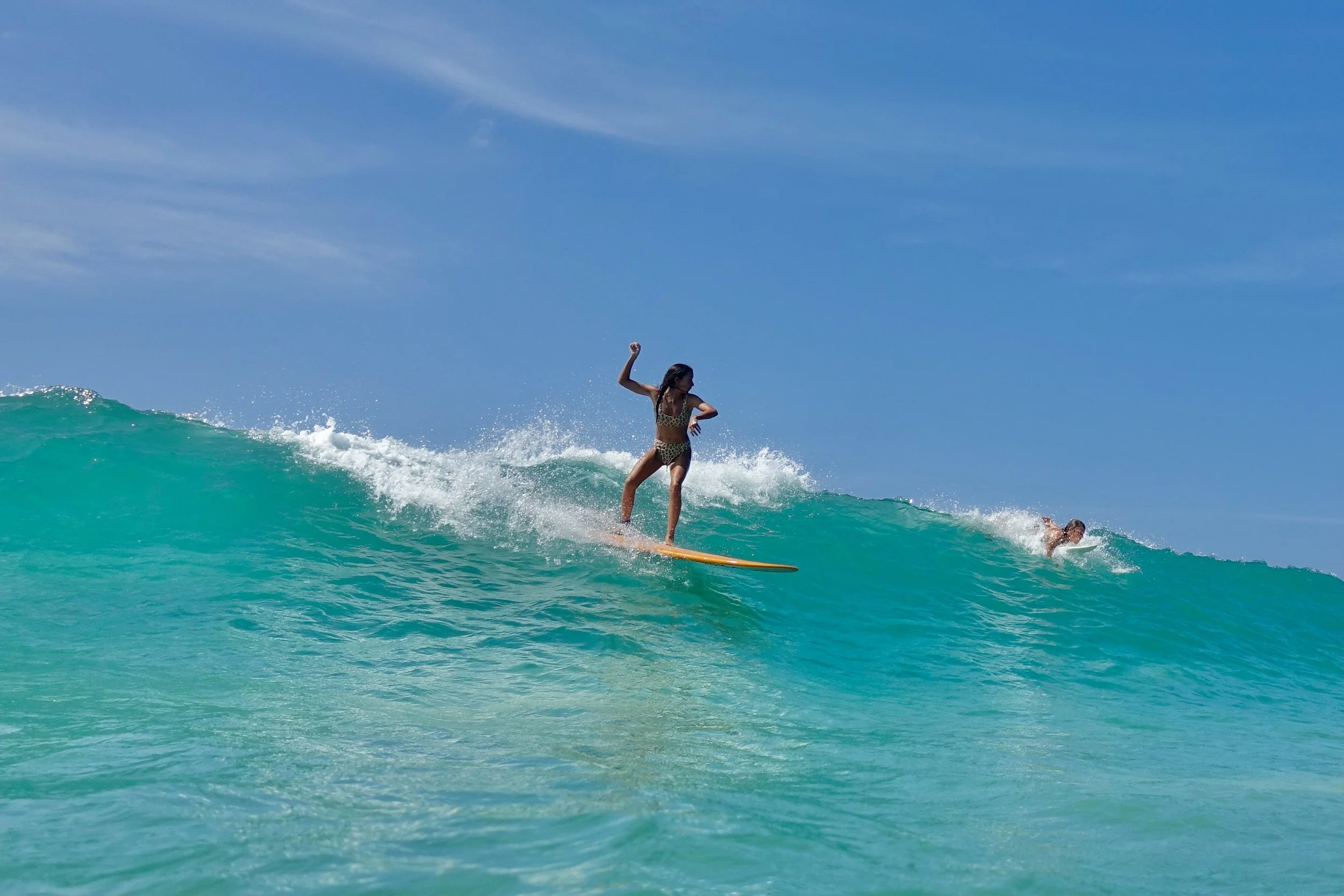
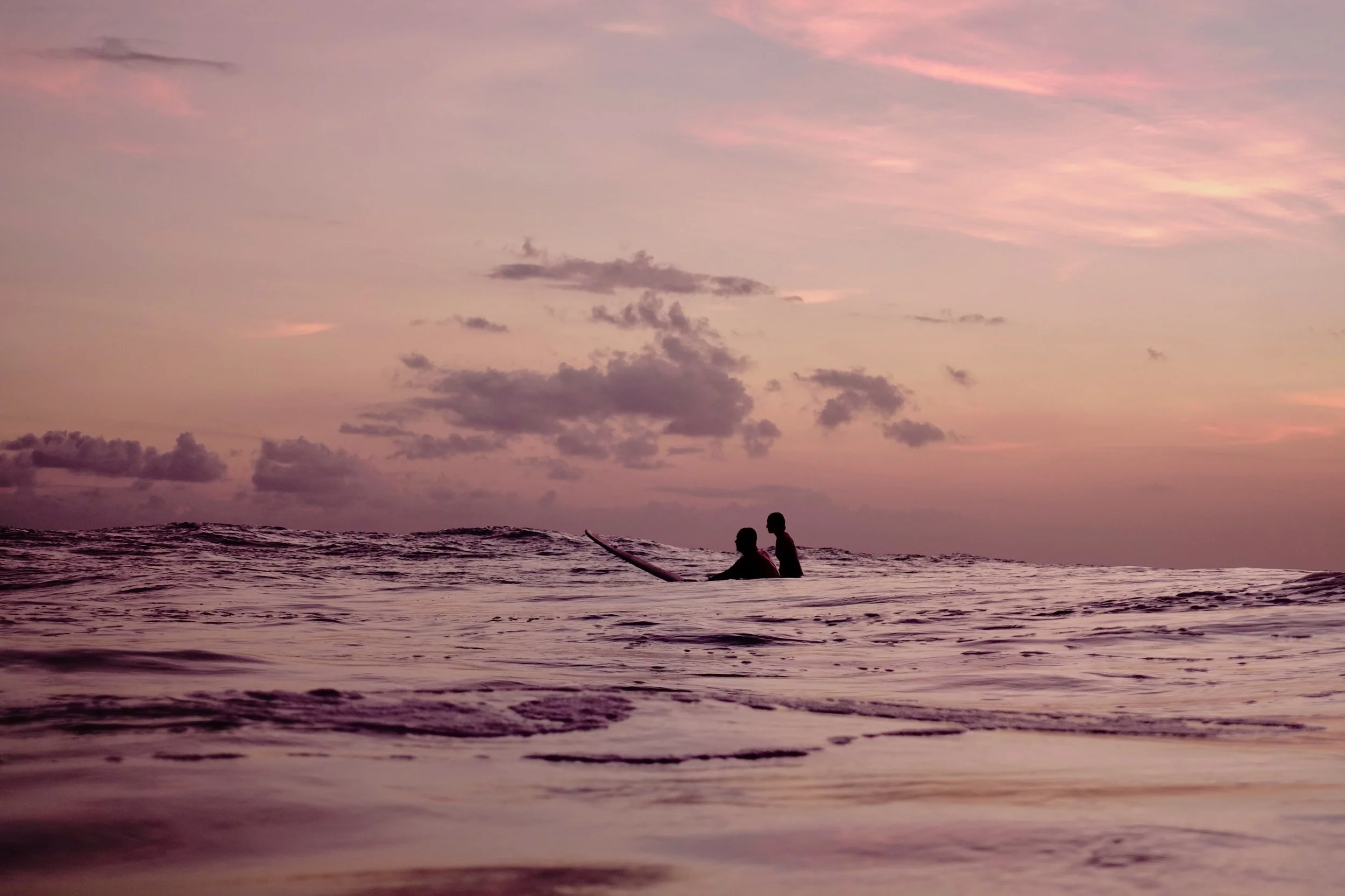
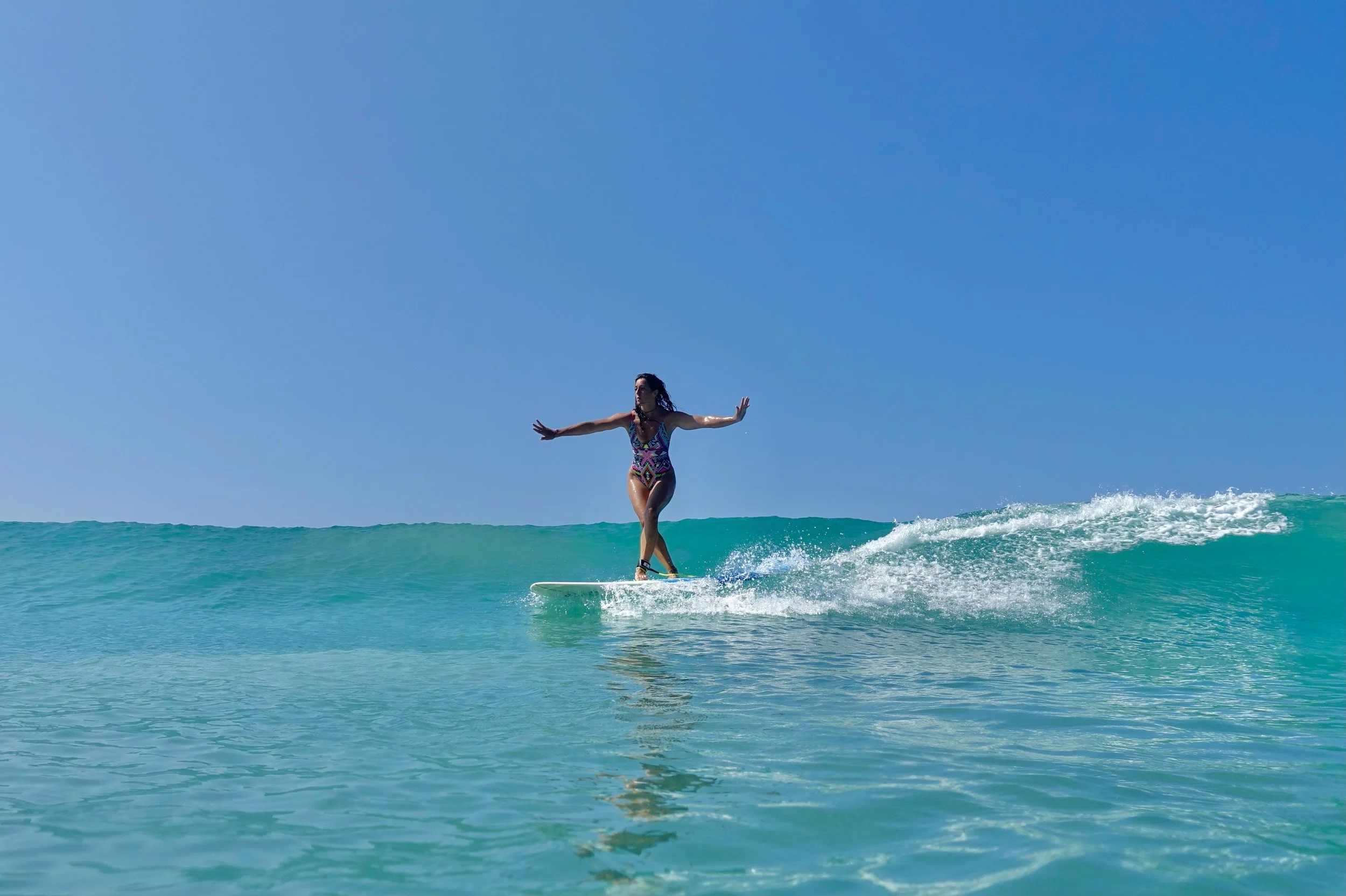
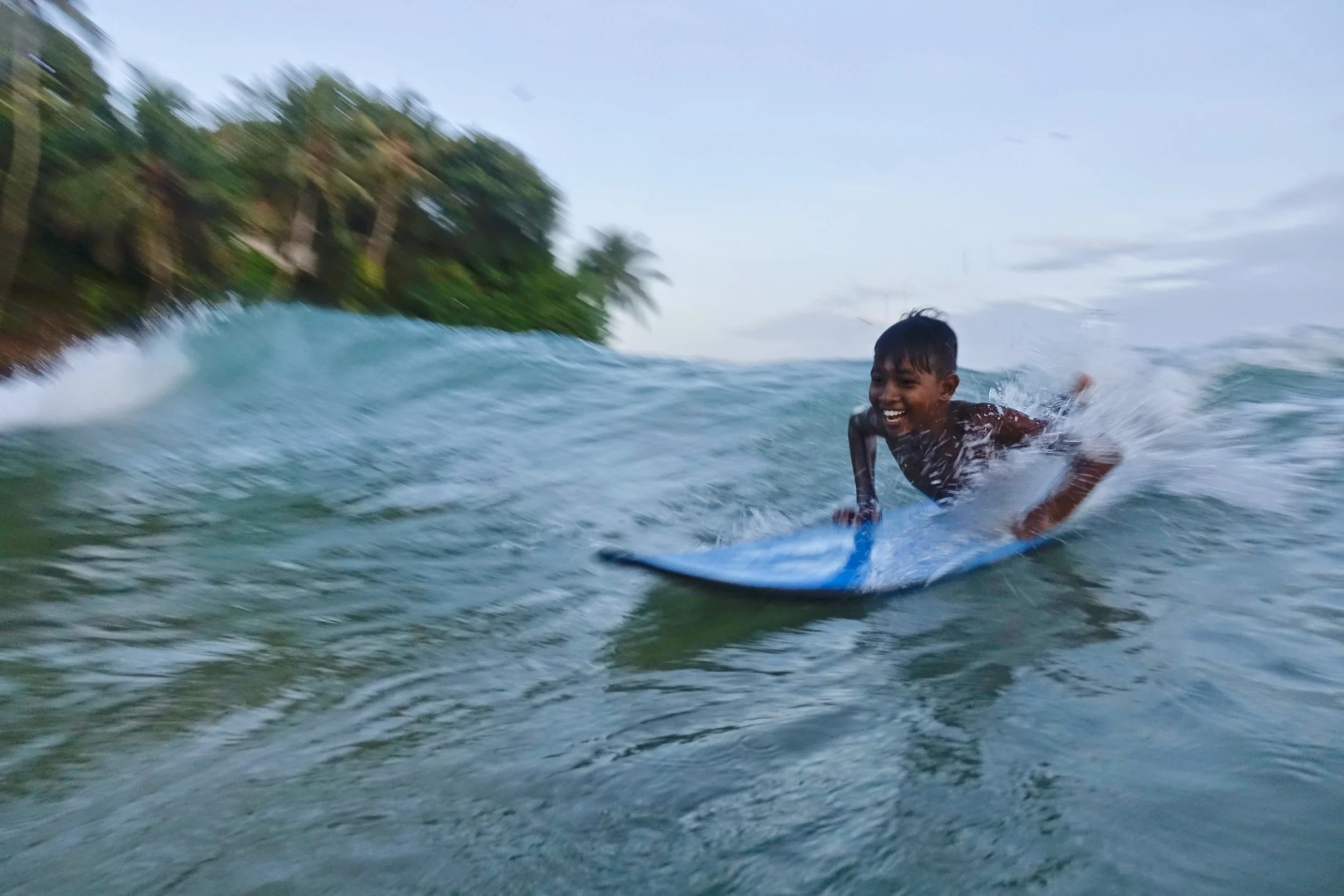
Eight of my first in-water images shot in Sri Lanka with a compact camera
Preparing for the Water
As you get closer to your first sessions a bit of physical preparation can make a big difference. Testing your swim fins in a pool or calm ocean conditions is a simple but important step. It gives you a chance to check comfort and fit. Personally, DaFin is the best for me, they’re comfy and last for years. If you want to try them too you can use discount code ‘larawaves’. Swimming with fins creates more resistance which uses muscles differently than you might expect. Building that familiarity before heading into more dynamic conditions will help you feel more confident and in control.
Fitness also plays a role here. In-water surf photography can be physically demanding, especially when you’re swimming against currents, diving under waves and managing your camera at the same time. Building a solid base level of fitness will help you stay in the water longer and reduce risk. One of the most important habits to build early is knowing when to leave the water. It’s always better to starting leaving before, not when, you feel tired. The swim back to shore can often be more strenuous than expected.
Managing Fear and Building Confidence
While the physical side of things is important, the mental side is often where the biggest challenges lie. These psychological barriers don’t disappear with experience either —they just change shape. That’s why it’s so important to develop ways of managing them early on, because those same tools will support you throughout your entire journey.
Learning to trust yourself is a big part of this. Knowing your limits is essential, but so is having the confidence to make decisions based on how you feel in the moment. There will always be a balance between pushing yourself and stepping back, and this is when you need to trust yourself. The key is to listen to your instincts and commit to your decisions. Hesitation in the water can be dangerous so you don’t want to enter with doubts.
It’s completely normal to feel nervous before entering the water, especially in the early stages. What matters is how you manage those nerves. Panic is something you want to avoid at all costs. It affects your breathing, your ability to think clearly and your physical energy. It can escalate quickly if you’re not prepared for it. That’s why taking a moment before entering the water to settle your mind and heart rate can make such a difference.
Simple techniques like controlled breathing, positive self-talk or even visualising your session can help bring your heart rate down and give you a sense of control. For me, breath work is a vital tool both before a big swim and during should things not go to plan. If you still have doubts, it’s okay to change your plan. There will always be another session and knowing when to step back is just as important as knowing when to go for it. Stepping back does not mean failure, it can look like rescheduling or checking another spot.
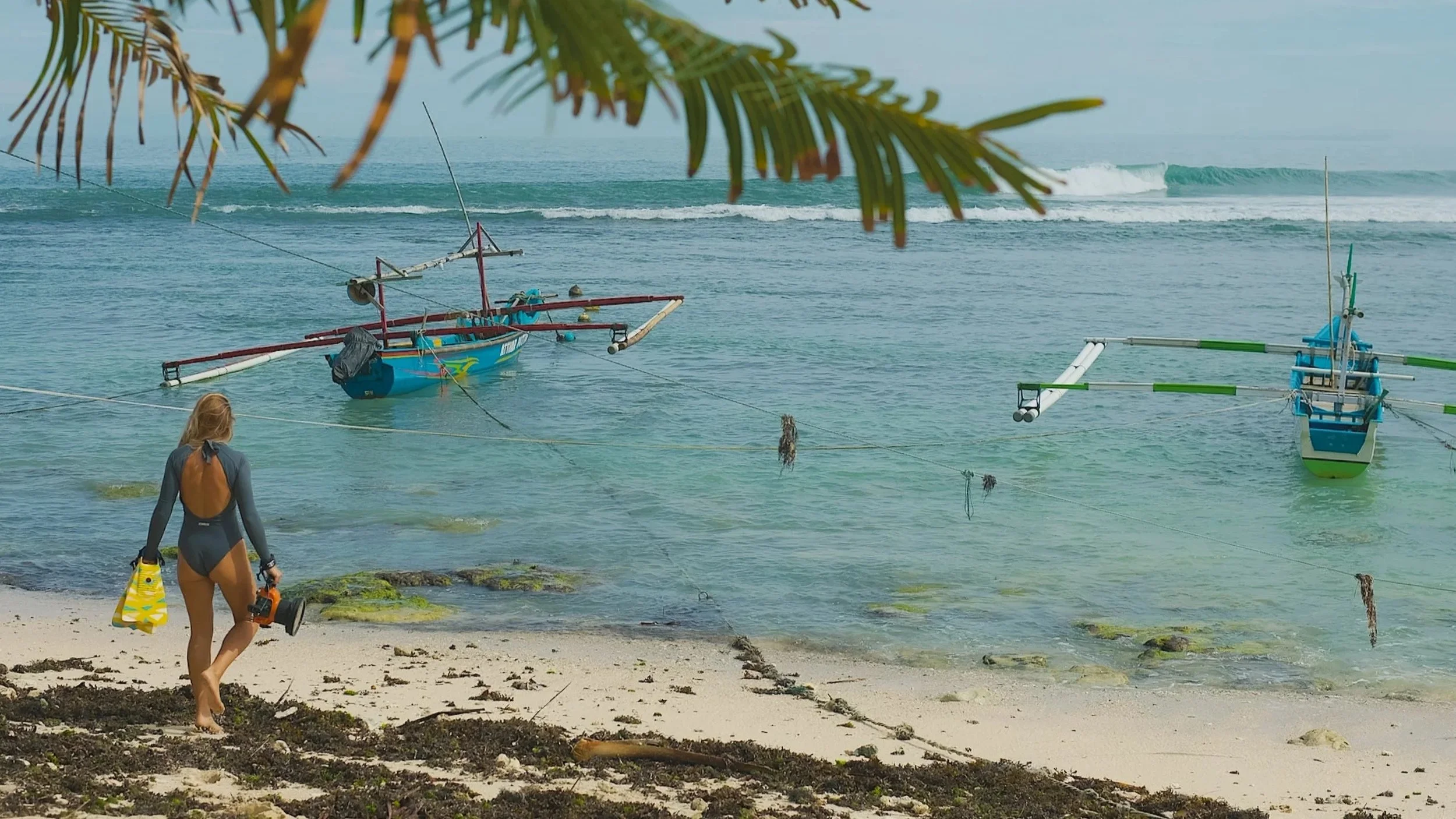
Entering the water in Indonesia after assessing the waves and taking some deep breaths (shot by @misterrclips)
Your First Sessions in the Water
Your first few sessions are about learning, not perfection. If you can, go out with friends and keep things relaxed. If you don’t have surfer friends yet then don’t worry, you’ll soon find some once they see you shooting. Going with friends allows you to enjoy the experience and build confidence naturally. Try not to feel pressure to deliver great shots on your first swims. It can take time to get used to being in the water with a camera so go easy on yourself and enjoy the process.
If you’re anything like me 70% will be throwaway shots so don’t stress and get creative. Use out of focus shots to play with editing techniques, see which perspectives speak to you and explore. Over time, you’ll begin to develop your own style and understanding of what works for you.
Progressing at Your Own Pace
As you find your rhythm, your confidence will grow and you’ll naturally start to push your boundaries. This might mean getting closer to the action, exploring different waves or staying in the water for longer periods.The key is to progress at your own pace. Trust your instincts, be honest with yourself and don’t feel pressure to rush the process. Every session is a step forward, even if it doesn’t feel like it at the time.
Not every swim will go to plan, and that’s part of the journey. Over time, you’ll collect your own experiences—some challenging, some frustrating and some incredibly rewarding. I’ve had equipment issues, difficult swims, and moments that didn’t go as expected but each one has shaped how I approach the water today.

All smiles after a good session with the girls in Indo (shot by @misterrclips)
Final Thoughts
Getting started with in-water surf photography can feel overwhelming, but it’s also one of the most rewarding ways to experience the ocean. It challenges you physically, mentally and creatively. It offers a completely unique perspective on surfing and the environment around it. Take your time, respect the ocean and trust yourself. There’s no rush and every session will teach you something new.
If you have any questions, feel free to reach out and if we happen to be in the same place, I’d always be up for a shoot. I’d also love to see what you create, so if you start capturing your own images, please share them with me at @lara.waves